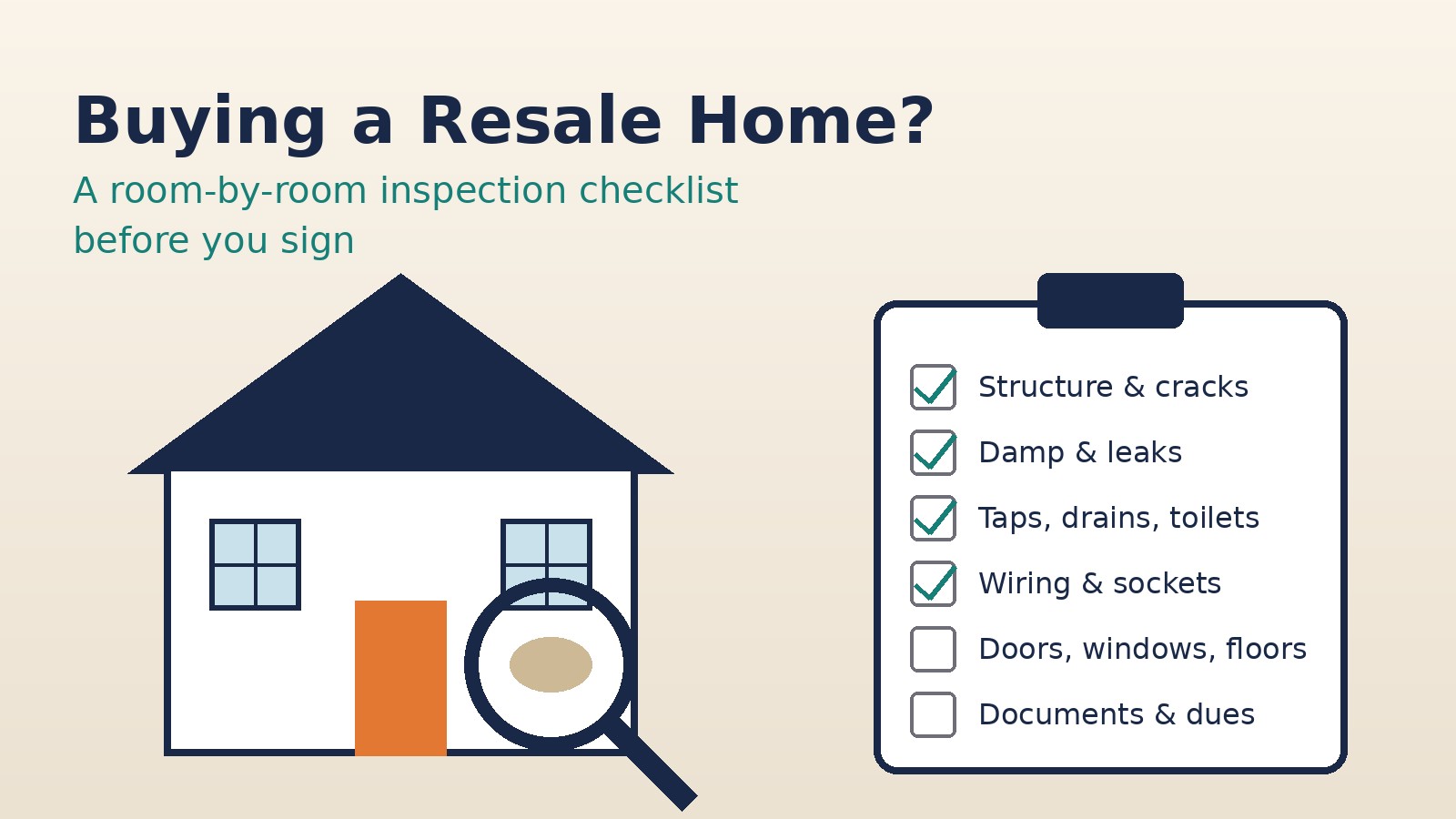
Buying a resale home feels safer than buying off-plan. The walls are already up, you can walk through the rooms, and you can see exactly what you are paying for. Or so it seems. Fresh paint hides damp patches, a new rug covers a cracked tile, and a 30-minute viewing on a sunny afternoon tells you nothing about how the bathroom drains or whether the water pressure holds on the top floor.
Most expensive surprises in second-hand homes are visible before you sign, if you know where to look and give yourself enough time. This guide walks through a practical, room-by-room inspection you can do yourself, the questions to ask the seller, and the red flags that should make you pause, negotiate, or walk away.
Before You Visit: Prepare Like an Inspector
A good inspection starts before you reach the property. Ask the seller or agent for the age of the building, when it was last renovated, and whether any major work (roof, plumbing, wiring, waterproofing) has been done. Request recent utility bills and, for apartments, the latest maintenance or society charges statement.
Then pack a small kit:
A torch for under sinks, inside cupboards, behind the water heater, and in dark corners.
A phone charger to check that sockets actually work.
A tape measure so your furniture plans are based on real numbers, not the listing.
Your phone camera. Photograph every defect with a note of the room. These photos become your negotiation list.
Visit at least twice, ideally once in daylight and once in the evening, and if you can, once after rain. Damp, drainage, noise, and parking problems often only show up at particular times.
Outside and Structure: The Expensive Stuff
Structural problems are the costliest to fix, so check them first. Walk around the building and look for:
Cracks in walls. Hairline cracks in plaster are common. Diagonal cracks running from the corners of doors and windows, or cracks wider than a coin's edge, can point to settlement and deserve a professional opinion.
Exposed or rusted steel on balconies, columns, and the undersides of beams. Rust stains bleeding through concrete are a warning sign.
Roof and terrace. On a top-floor unit or a house, check for pooling water, broken waterproofing, and blocked drain outlets.
Drainage around the building. Water marks along the base of the walls suggest poor drainage or rising damp.
For apartments, also look at the common areas. Peeling paint in the stairwell, a lift that is often out of order, and overflowing bins tell you how well the building is managed, and that affects your future maintenance bills and resale value.
Damp and Water Leaks: The Silent Problem
Water damage is the most common hidden defect in resale homes, and fresh paint is the most common way it gets hidden. Check:
Ceilings below bathrooms and kitchens on the floor above, especially in corners.
Walls shared with bathrooms, for bubbling paint, white powdery salts, or soft plaster.
Inside wardrobes and behind large furniture, where damp is rarely painted over.
Window frames and sills, for gaps, stains, or swollen wood.
A musty smell in a closed room is often the first sign of a moisture problem. If one wall looks freshly painted while the rest of the room does not, ask why.
Kitchen and Bathrooms: Turn Everything On
Do not be shy here; a serious seller expects you to test things. In every wet area:
Run every tap for a minute, hot and cold. Watch the pressure, the water colour, and how long hot water takes to arrive.
Flush the toilets and check that they refill properly and stop running.
Fill the sink and let it drain. Slow drains and gurgling sounds can mean blocked or badly sloped pipes.
Look under sinks with your torch for drips, stains, swollen cabinet bases, or makeshift repairs.
Tap on wall and floor tiles. A hollow sound over a wide area can mean tiles are coming loose, often because water is getting behind them.
Check exhaust fans and ventilation. Poor ventilation is the root cause of most bathroom mould.
Also ask where the water comes from (municipal supply, a bore, or tankers), how large the storage tank is, and how often it is cleaned. In many cities, reliable water supply matters as much as the house itself.
Electrical System: Safety Before Style
Old or overloaded wiring is a safety risk, not just an inconvenience. Open the distribution board and look for:
Modern circuit breakers rather than old fuses, and ideally an earth leakage or residual current device.
Labelled circuits, so you know what each breaker controls.
Scorch marks, a burning smell, or loose wires.
Plug your charger into a sample of sockets in each room and note any that are dead. Open and close every door and window while you walk through, too. Ask how old the wiring is and what the sanctioned electrical load is, especially if you plan to run several air conditioners.
Paperwork and Questions to Ask the Seller
A physical inspection covers only half the risk. Before you pay any token money, confirm:
That the seller is the registered owner, and the documents match the unit you inspected.
That there are no unpaid utility bills, property taxes, or society or maintenance dues that could pass to you.
Whether additions such as an extra room, an enclosed balcony, or an extra floor were built with approval. Unapproved construction can cause problems at transfer or resale.
What is included in the sale: fixtures, kitchen fittings, water heater, air conditioners, and solar panels.
For document verification, it is worth paying a property lawyer. The fee is small compared with the cost of buying a home with a disputed title. If you are buying to rent out, run the numbers too, using a guide like analyzing a rental property before you buy.
Red Flags vs. Negotiation Points
Not every defect is a deal-breaker. Sort what you find into two groups.
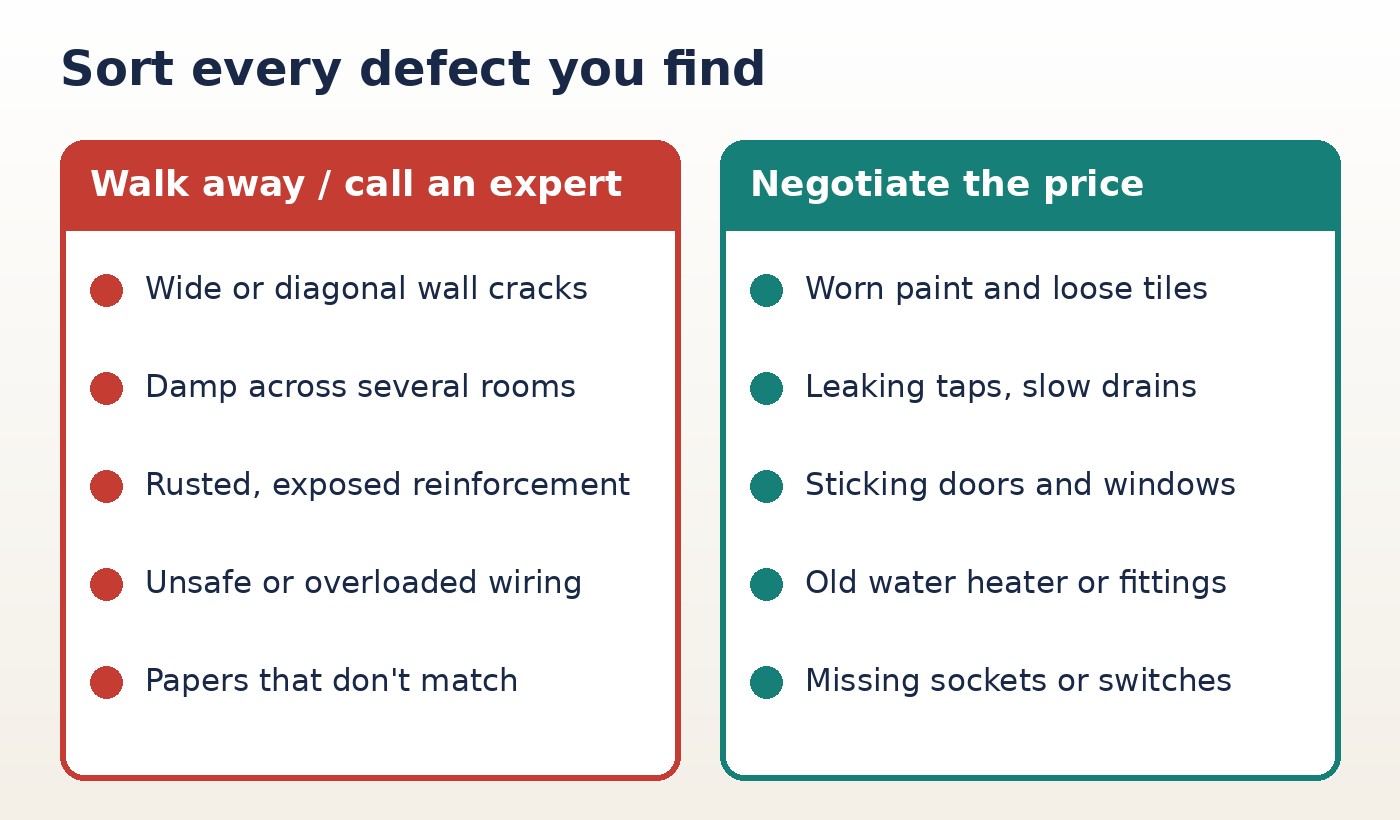
Serious defects call for an expert; cosmetic and moderate ones belong on your negotiation list.
Walk away, or get an expert first, if you see wide or diagonal structural cracks, damp across several rooms, exposed rusted reinforcement, unsafe wiring, or ownership documents that do not add up.
Negotiate on cosmetic and moderate repairs: worn paint, loose tiles, leaking taps, sticking doors, an old water heater, or broken fittings. Get rough repair quotes from a local contractor, then present your photo list and the estimated costs to the seller. A specific, documented list is far more persuasive than a vague "it needs work."
When to Hire a Professional Inspector
A DIY inspection catches most visible problems, but bring in a qualified engineer or home inspector if the building is more than 15 to 20 years old, if you found any structural or damp concerns, or if the price is high enough that a mistake would really hurt.
Conclusion
A resale home lets you see what you are buying, but only if you actually look. Go in prepared, test every tap and socket, hunt for damp, check the structure and the paperwork, and turn every defect into a photo and a cost. An hour of careful inspection can save you months of repairs, or give you the evidence to negotiate a better price. Take your time; the right home will still be there after a second visit.