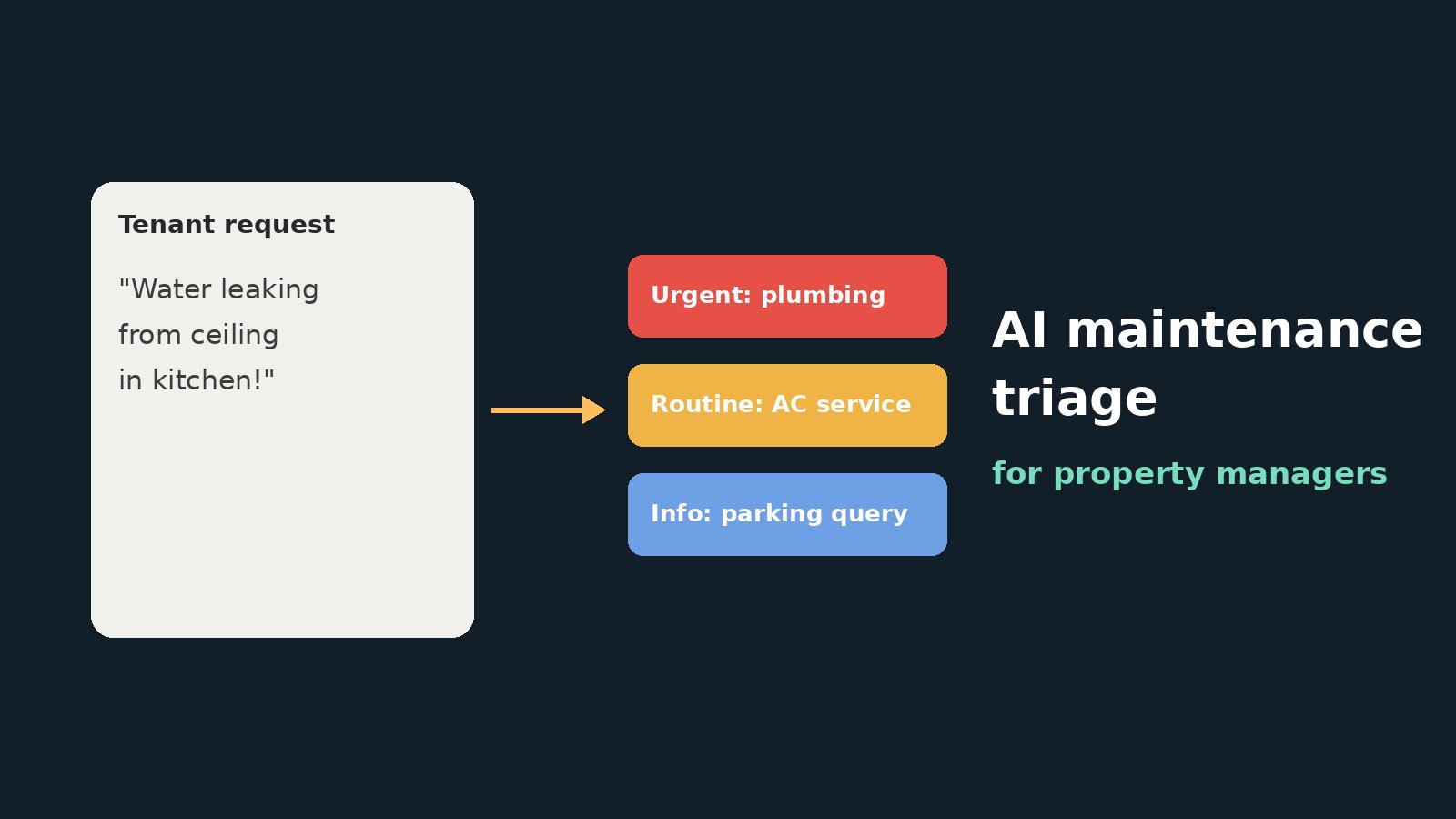
For property managers, maintenance requests never stop. A leaking tap, a broken AC in July, a lift out of service, a door that won't lock, and a dozen "quick questions" arrive every day through phone calls, emails, apps, and WhatsApp. Each one has to be read, understood, prioritized, and sent to the right technician or vendor. When the team is busy, urgent problems get buried under routine ones and tenants wait. An AI maintenance triage system reads every request instantly, sorts it by urgency and trade, and routes it, while people stay in control of anything risky.
What Maintenance Triage Involves
Triage answers a few questions for every request: which property and unit, what the problem is, which trade it needs (plumbing, electrical, HVAC, carpentry, pest control), how urgent it is, and whether it is the tenant's or landlord's responsibility. It also spots duplicates, such as five tenants reporting the same broken lift, and requests that aren't maintenance at all.
The Pipeline
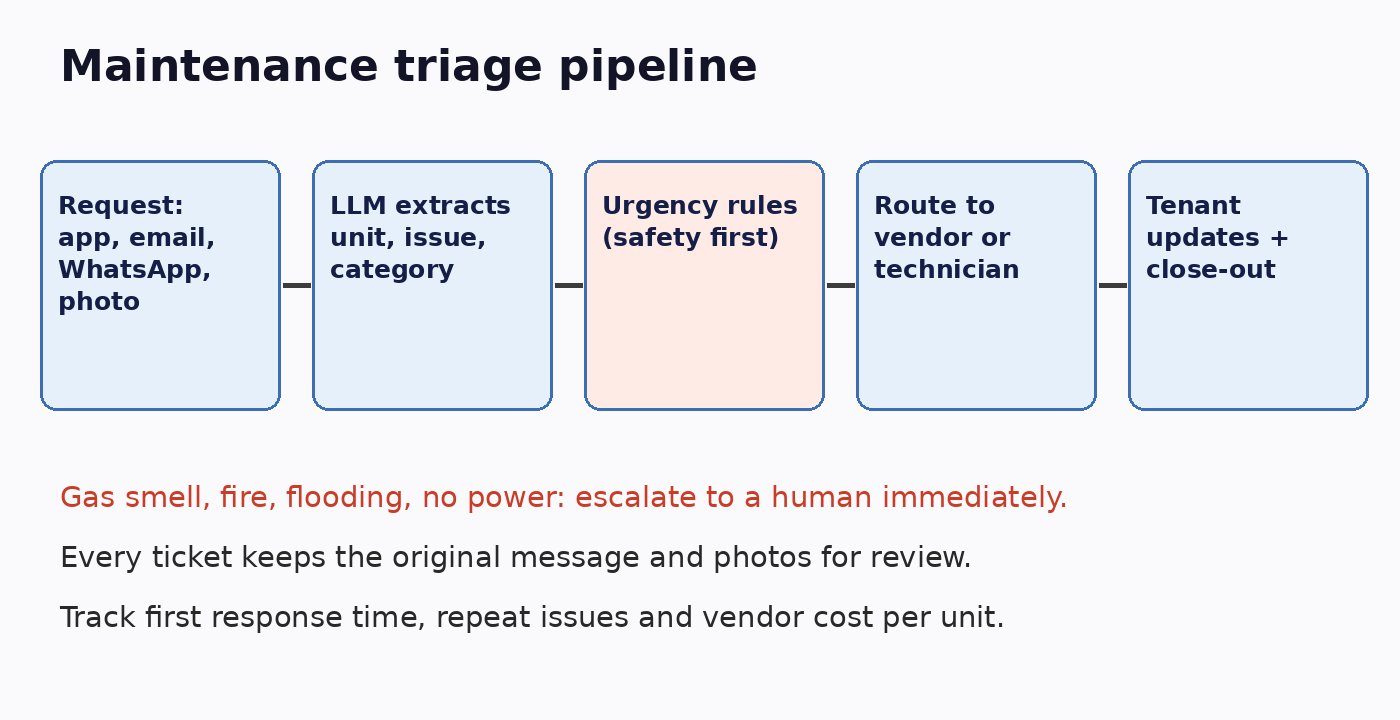
Step 1: Collect Requests in One Place
Bring every channel into a single queue: tenant portal, email, WhatsApp Business, and call-center notes. Keep the original message, attachments, and sender details with each ticket. Photos and short videos are especially valuable because they show the problem better than most descriptions.
Step 2: Extract Structured Details With an LLM
Use a language model with structured output to turn free text into fields: unit, location in the unit, issue summary, trade category, symptoms, access instructions, and preferred visit times. Match the tenant to your property records instead of trusting the address they typed. If key details are missing, the assistant asks a short follow-up question, the same conversational pattern we used in the AI lead qualification assistant for real estate. Vision models can help describe photos, for example identifying a water stain or a tripped breaker, but treat that as a hint for the technician, not a diagnosis.
Step 3: Decide Urgency With Rules, Safety First
Urgency is where mistakes are costly, so don't leave it entirely to the model. Define clear rules your team agrees on:
- Emergency: gas smell, fire or smoke, flooding, sparking or exposed wiring, no power, broken entrance locks, people stuck in a lift. These escalate to a human on call immediately, with safety instructions sent to the tenant.
- Urgent: no hot water, AC failure in extreme heat, a blocked only toilet, active leaks. Target same-day response.
- Routine: dripping taps, minor appliance faults, cosmetic damage. Schedule within your standard window.
- Not maintenance: rent, parking, or noise queries routed to the right team.
Let the model suggest a level, then apply keyword and rule checks on top. When in doubt, round up. A false alarm costs a phone call; a missed gas leak costs far more.
Step 4: Route to the Right Person
Map trade and location to technicians or approved vendors, considering availability, service-level agreements, and cost limits. Work under a set amount can be auto-assigned; anything above needs manager or owner approval. Check warranty and responsibility rules too, since new buildings may still be under developer warranty, and some leases make tenants responsible for minor repairs.
Step 5: Keep Tenants Informed
Much of tenant frustration comes from silence. Send automatic updates when a ticket is received, assigned, scheduled, and completed, and ask for a quick rating at the end. Generate messages from the ticket data, in the tenant's language, and avoid promising times the vendor hasn't confirmed.
Reading Invoices and Reports
Vendors send quotes, invoices, and completion reports, often as PDFs or photos. The same techniques from extracting data from real estate documents with AI can capture amounts, parts, and work descriptions, match them to the ticket, and flag invoices that exceed the approved quote.
Testing Before You Trust It
Before launch, collect a few hundred real past requests, anonymized, and label the correct trade and urgency for each. Measure how often the system gets them right, paying special attention to emergencies: the target for missed emergencies should be zero. Rerun the test whenever you change prompts, rules, or models. Our guide to testing LLM features before production explains how to build this kind of evaluation set.
Guardrails
- Never let the AI tell tenants a dangerous situation is safe. Safety instructions should come from approved templates.
- Always offer a way to reach a human, especially out of hours.
- Don't let the model approve spending or close tickets without confirmation from the technician or tenant.
- Protect personal data, access instructions, and door codes; limit who and what can see them.
- Treat tenant messages as untrusted input that can't change system instructions.
Measuring the Impact
Track first response time, time to resolution by urgency level, share of tickets auto-classified correctly, repeat issues per unit, vendor cost per ticket, and tenant satisfaction. Repeat issues are especially useful; they reveal units or buildings that need a proper fix rather than another patch.
Launch Checklist
- All channels feed one ticket queue with original messages kept.
- Structured extraction is matched to real property and unit records.
- Emergency rules escalate to an on-call human immediately.
- Routing respects trade, location, warranties, and spending limits.
- Tenants receive automatic, accurate status updates.
- Accuracy is tested on labeled past requests, with zero missed emergencies.
Conclusion
AI maintenance triage lets property managers respond to every request in minutes, put emergencies first, and send the right technician the first time. Combine LLM extraction with clear safety rules, sensible routing, honest tenant updates, and careful testing, and your team spends less time sorting messages and more time actually fixing buildings.